The Case for a Mobile-First Marketing Strategy in the Purebred Cattle Industry
A practical guide to mobile-first marketing for purebred cattle breeders — covering buyer behavior, always-on visibility, digital profiles, and how mobile tools work alongside traditional marketing to extend a seedstock operation's reach year-round.
What does mobile-first marketing mean in the context of purebred cattle?
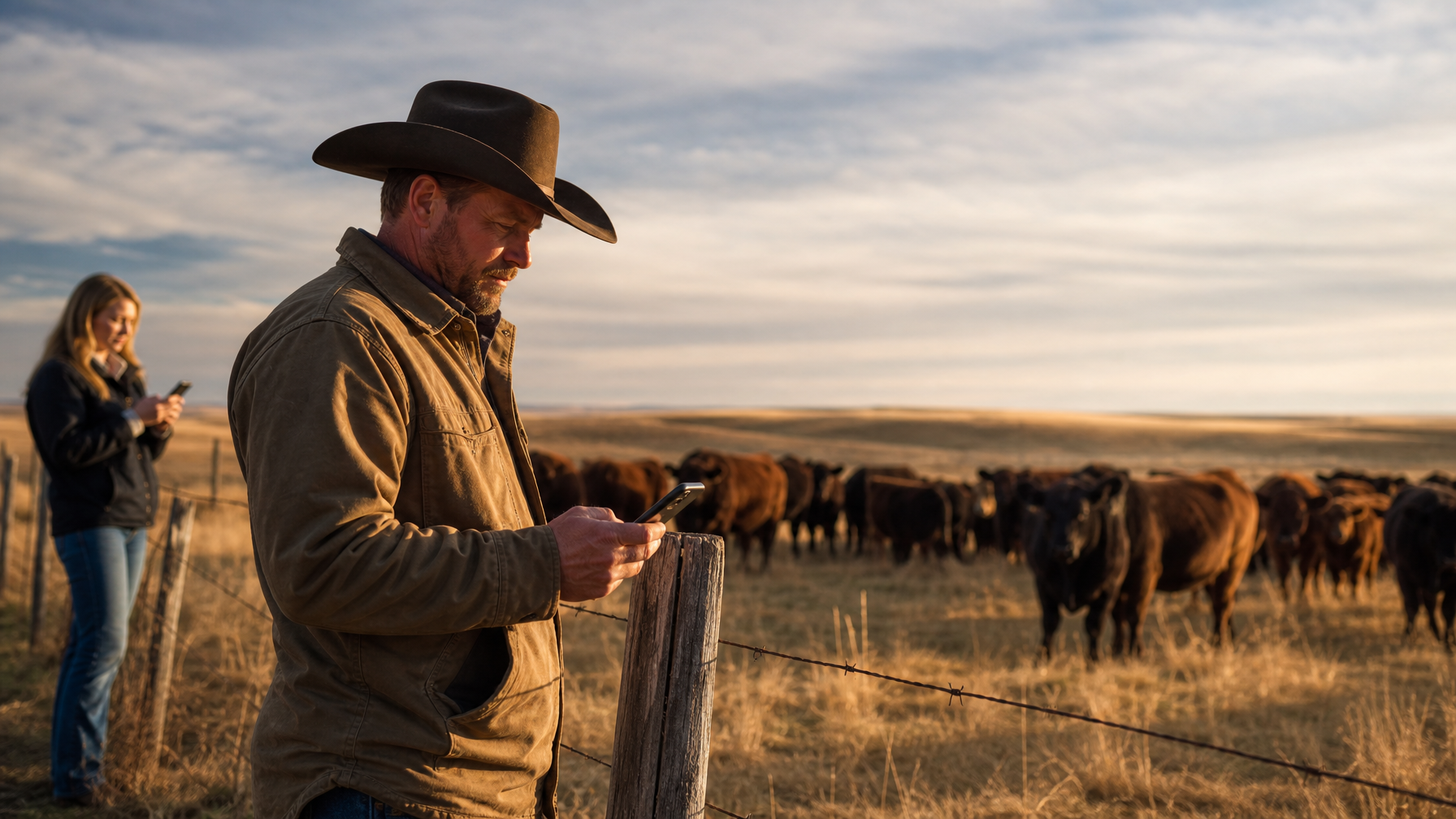
Mobile-first marketing means your operation's information — your genetics, your sale dates, your contact details, your catalogue — is immediately accessible on a smartphone, without extra steps. For a purebred cattle operation, it means a buyer standing at a sale barn in Manitoba or scrolling through their phone on a Sunday evening in Saskatchewan can find your bulls, read your EPDs, and know when your next sale is, all at the right moment, wherever they happen to be.
It does not require abandoning what already works. Print catalogues, breed association ads, word of mouth, and field days remain some of the most effective tools in the seedstock industry. Mobile-first is the layer that keeps your operation visible between those touchpoints — during the long stretches of the year when buyers are thinking, planning, and asking questions but your next event is still months away.
The cattle industry runs on relationships. Mobile does not replace relationships. It keeps those relationships warm and your name top of mind.
How Buyers Research Purebred Genetics Today
How do cattle buyers find and evaluate seedstock before a sale?
Buyers do their homework before they ever set foot at a sale. According to Mississippi State University Extension, buyers increasingly insist on specific performance data — EPDs, ultrasound scan results, breeding soundness evaluations, and health programs — before committing to a purchase. (Source: MSU Extension — Beef Cattle Seedstock Marketing: https://extension.msstate.edu/publications/beef-cattle-seedstock-marketing)
That due diligence happens well in advance of sale day. A buyer planning for spring turnout is thinking about genetics in November. A producer looking to upgrade his Angus sires is evaluating options in January, long before the February sales hit full swing.
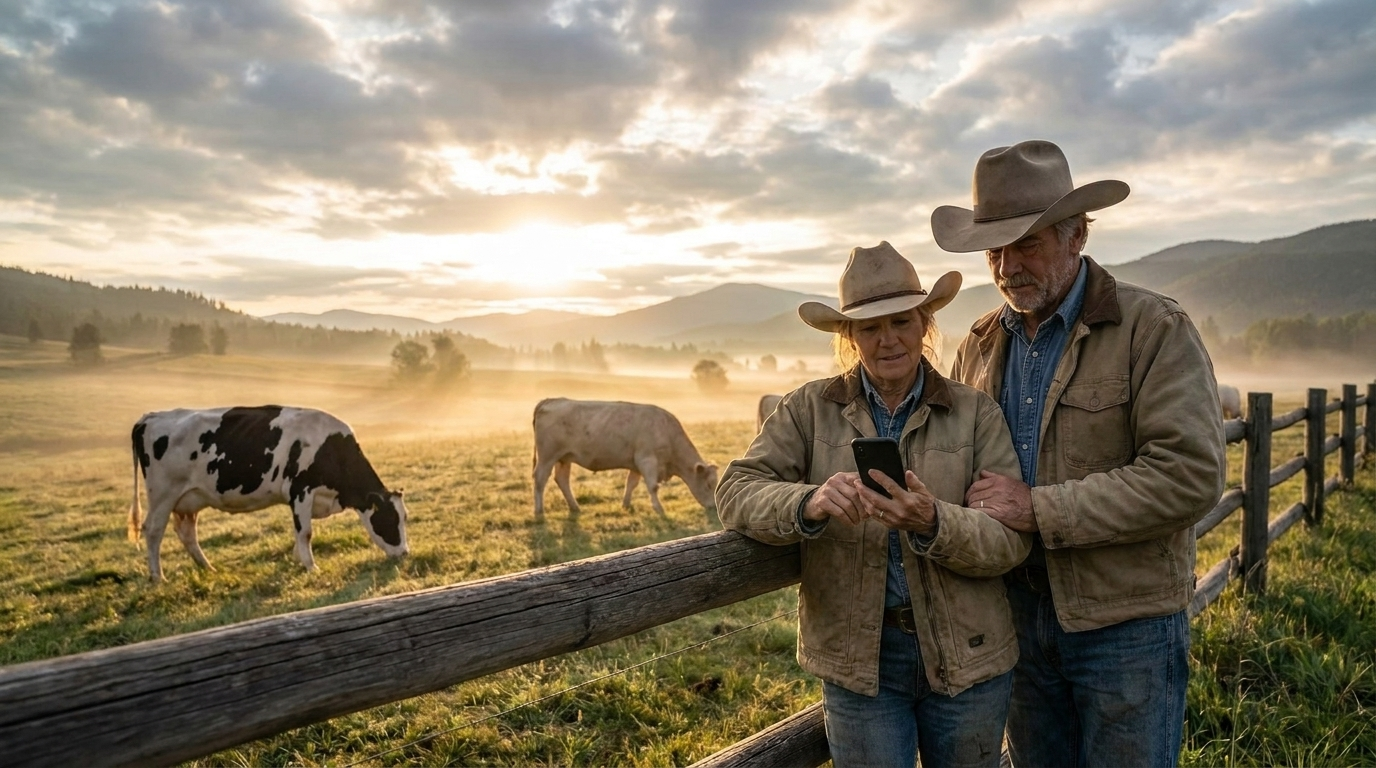
Where are they doing that research? On their phone. Between chores, on the road, at the kitchen table after supper. If your operation does not have a presence that loads cleanly on a mobile screen and gives buyers the information they need in under two minutes, you are invisible during the most important part of the buying decision.
The Limits of Seasonal Visibility
Why does timing matter so much in seedstock marketing?
Purebred cattle marketing has a natural rhythm. Sale season brings a concentrated burst of visibility — catalogues go out, ads run in breed publications, social media posts ramp up, and the phones start ringing. For many operations, that burst lasts six to eight weeks. Then the calendar quiets down until the next cycle.
The challenge is that buyers think about genetics year-round. A producer who just weaned calves in October is already mentally calculating what sires he wants to use next breeding season. A new producer building her first commercial herd is researching breeds and breeders throughout the winter. If your operation's only visible moment is a two-week window around your bull sale, you miss a large portion of the conversations that eventually lead to a sale.
Seedstock marketing is, as MSU Extension notes, "an ongoing effort, not an occasional event." A mobile presence extends your reach into the months when print catalogues are long gone and the next sale season has not yet begun.
What a Strong Mobile Presence Looks Like
What should a purebred cattle breeder's digital profile include?
A strong mobile profile for a seedstock operation covers the same ground as a well-written printed catalogue, but it is always current and always accessible. At minimum, it should include:
- Operation overview: your breeds, your breeding philosophy, your herd size, and what makes your genetics different.
- Current sale offerings: bulls, heifers, embryos, or semen, with photos and performance data.
- Upcoming sale dates and details: location, format (private treaty, auction, online bidding), and how to register or bid.
- Contact information: a direct phone number and a way to reach you without going through a general website form.
- Association affiliations: your breed registries and any performance testing programs your cattle participate in.
The difference between a mobile profile and a website is accessibility. A website is excellent for buyers who are actively searching. A mobile-first platform built around the cattle industry puts your profile in front of buyers who are browsing the industry — looking at sale calendars, following association news, and comparing operations — without necessarily typing your name into a search engine.
Platforms like Elite Stock (https://www.elitestock.ca) are built specifically for this. Rather than asking buyers to hunt across a dozen different breeder websites and social media pages, Elite Stock centralizes breeder profiles, sale catalogues, and the Canadian sale calendar in one place — so buyers find you while they are already engaged with the industry.
Profiling Individual Animals: Sires, Females, and the Data Buyers Need
What information should a breeder include when profiling individual sires and females?
A breeder profile tells buyers about your operation. An individual animal profile gives them a reason to buy. These are two different things, and the seedstock industry's most effective digital marketing treats them that way.
When a commercial producer is evaluating a herd sire, the operation's reputation gets him to the table. The bull's numbers close the deal. A well-built mobile profile for an individual sire includes his photo, his registration number, his key EPDs — calving ease, weaning weight, yearling weight, maternal milk, and carcass traits depending on breed — and a direct link to his full record on the breed association database. For Canadian Angus bulls, that means a link to his Angus Canada profile. For Simmental, a link to the Canadian Simmental Association record. For Charolais, Hereford, Limousin, or any other registry — the same principle applies.
That link does something a printed catalogue cannot: it gives the buyer live, up-to-date data. Breed association EPDs are recalculated on a regular basis as more progeny data comes in. A catalogue printed in January may already carry numbers that have been revised by the time the sale runs in March. A link to the registry record always shows current figures, which builds buyer confidence and removes the friction of a follow-up call to ask for updated EPDs.
The same logic applies to females. Whether you are marketing registered heifers, proven cows, or flushes from donor females, a profile that includes the animal's registration number, her dam's production record, and a link to her breed association page gives buyers everything they need to evaluate the genetics before they ever set foot on your property or dial in to your auction. For operations running embryo or semen programs, linking sire and donor records directly from the offering page removes ambiguity and accelerates the buyer's decision.
For multi-breed operations, this is where a centralized platform has a clear advantage over a single-operation website. Managing individual animal profiles across two or three breeds — each with its own registry link, its own EPD format, and its own terminology — is cumbersome on a generic website. A platform built for the livestock industry handles that structure natively, so breeders can present Angus bulls alongside Simmental females without the profiles looking inconsistent or cobbled together.
Elite Stock allows breeders to build individual animal profiles directly within their operation's listing, with fields for registration numbers and external links that point buyers straight to the source data. A buyer browsing the sale catalogue can move from the operation overview to a specific bull's profile to his Angus Canada EPD page in three taps — without leaving the platform or waiting for a catalogue to arrive in the mail.
The Sale Calendar as a Discovery Tool
How does a centralized sale calendar help a breeder get found?
One of the most underappreciated tools in seedstock marketing is a well-maintained sale calendar entry. When a buyer is planning their season — deciding which sales to attend, which catalogues to request, which breeders to follow up with — they start with the calendar.
A sale calendar entry is passive marketing that works without any ongoing effort. Once your sale date is listed, every buyer who opens the calendar to plan their season will see your operation. If your entry links directly to your profile and digital catalogue, that passive exposure turns into active engagement.
In the Canadian seedstock industry, sale dates are currently scattered across various platforms, and word of mouth. A centralized mobile calendar that aggregates all of that information into one place changes the discovery equation for buyers and breeders alike. Your sale no longer competes only with the operations a buyer already knows — it shows up alongside every other sale in the country, giving you exposure to buyers who would never have found you through their existing network.
Push Notifications: Reaching Buyers Before the Crowd Does
How do push notifications fit into a cattle marketing strategy?
Push notifications are the mobile equivalent of a well-timed phone call — except they scale. When your catalogue drops, when online bidding opens, or when you add bulls to your private treaty list, a push notification reaches every buyer who has opted in to follow your operation, instantly.
In a competitive sale season where buyers are evaluating multiple operations, timing matters. The breeder whose catalogue is open on a buyer's screen first has an advantage. Push notifications remove the lag between "we just published" and "buyers know about it."
Mobile Works Best Alongside What You Already Do
Does going mobile mean replacing the things that already work?
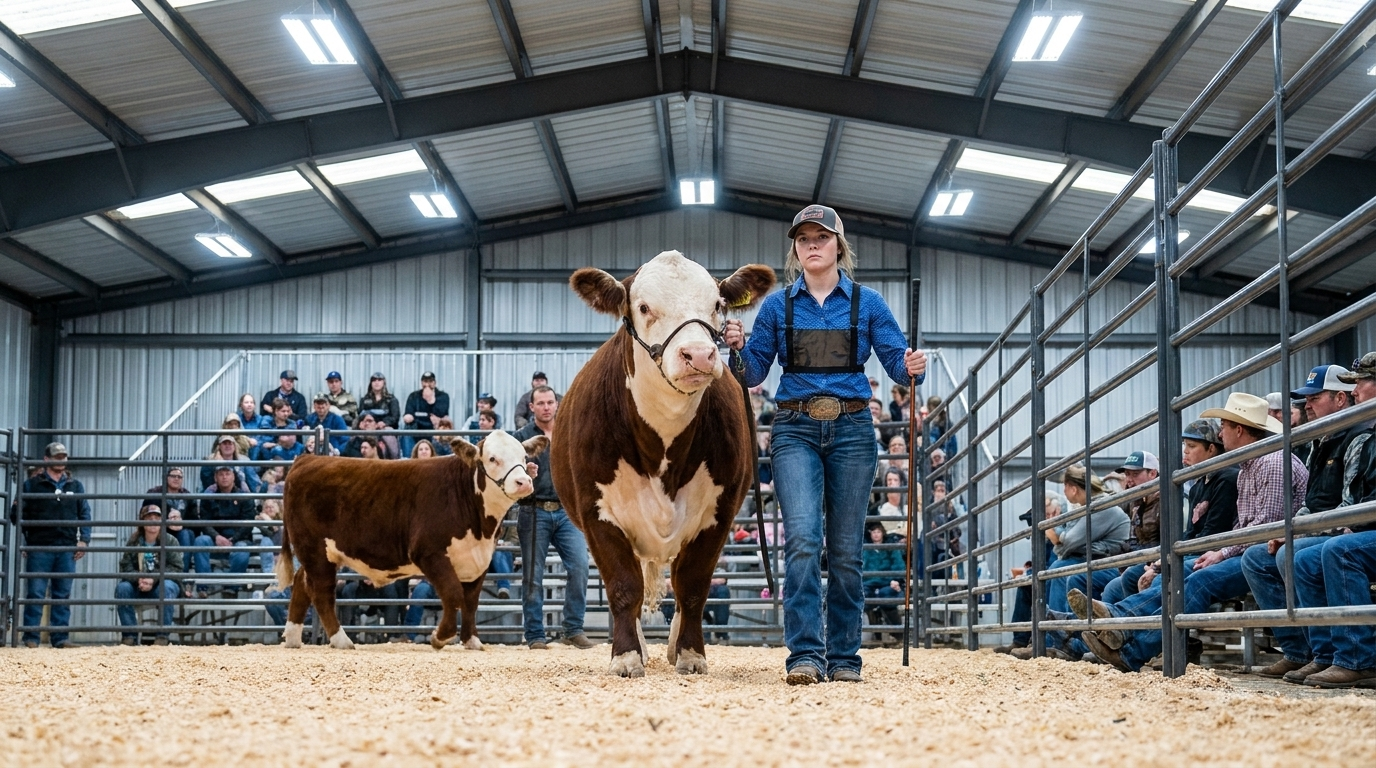
No — and that distinction matters. The seedstock industry's traditional marketing methods work because they are built on trust, relationship, and reputation. A printed catalogue that a buyer marks up with a red pen and carries to the sale barn has a tangible, credible weight to it. A field day where a buyer walks pens and handles your bulls builds the kind of confidence that closes deals that digital channels alone cannot close.
Mobile marketing's strength is reach and persistence. It puts your existing reputation — your genetics, your name, your track record — in front of more people for more of the year. The breeder whose operation is well-represented on a mobile platform is not replacing their catalogue; they are making sure that catalogue finds its way into more hands before it even goes to print.
Think of it as your operation's always-on presence. Sale day has a beginning and an end. Your mobile profile does not.
Getting Started with Mobile-First Marketing
What is the first step for a seedstock breeder who wants to build a mobile presence?
Start with the basics and get them right before adding complexity:
- Claim a profile on a livestock-specific platform. A general website is a good foundation, but a profile on a platform purpose-built for the cattle industry puts you in front of buyers who are already there. Elite Stock (https://www.elitestock.ca) offers tiered breeder profiles that range from a foundational listing to a full multimedia showcase, depending on the size and goals of your operation.
- List your sale dates. Get your next sale on the calendar now and add to it as information becomes available — start with the date and location, then layer in your catalogue, pen assignments, and sale day details as they're ready. Buyers plan early, and an entry that grows over time keeps your sale visible and relevant from the first announcement right through to sale day.
- Upload a current catalogue or offering list. Even a basic PDF with your sale bulls' photos and EPDs gives buyers something to evaluate. A catalogue published on a livestock marketplace puts your offering in front of buyers who are already there, actively browsing genetics and planning their season.
- Keep your contact information current. The number of seedstock operations with outdated phone numbers or dead links is higher than most breeders realize. A buyer who cannot reach you quickly moves on.
The purebred cattle industry runs on reputation, genetics, and relationships — and those things do not change. What changes is where buyers go to find them. The operation that meets buyers where they already are, on their phones, in the apps they check between chores, is the operation that stays top of mind from October through April and into the next sale season.
Elite Stock is a Canadian mobile marketplace built for the seedstock industry. Breeders list profiles, publish digital catalogues, and connect with buyers through a centralized sale calendar and push notification system.
Learn more at
https://www.elitestock.ca